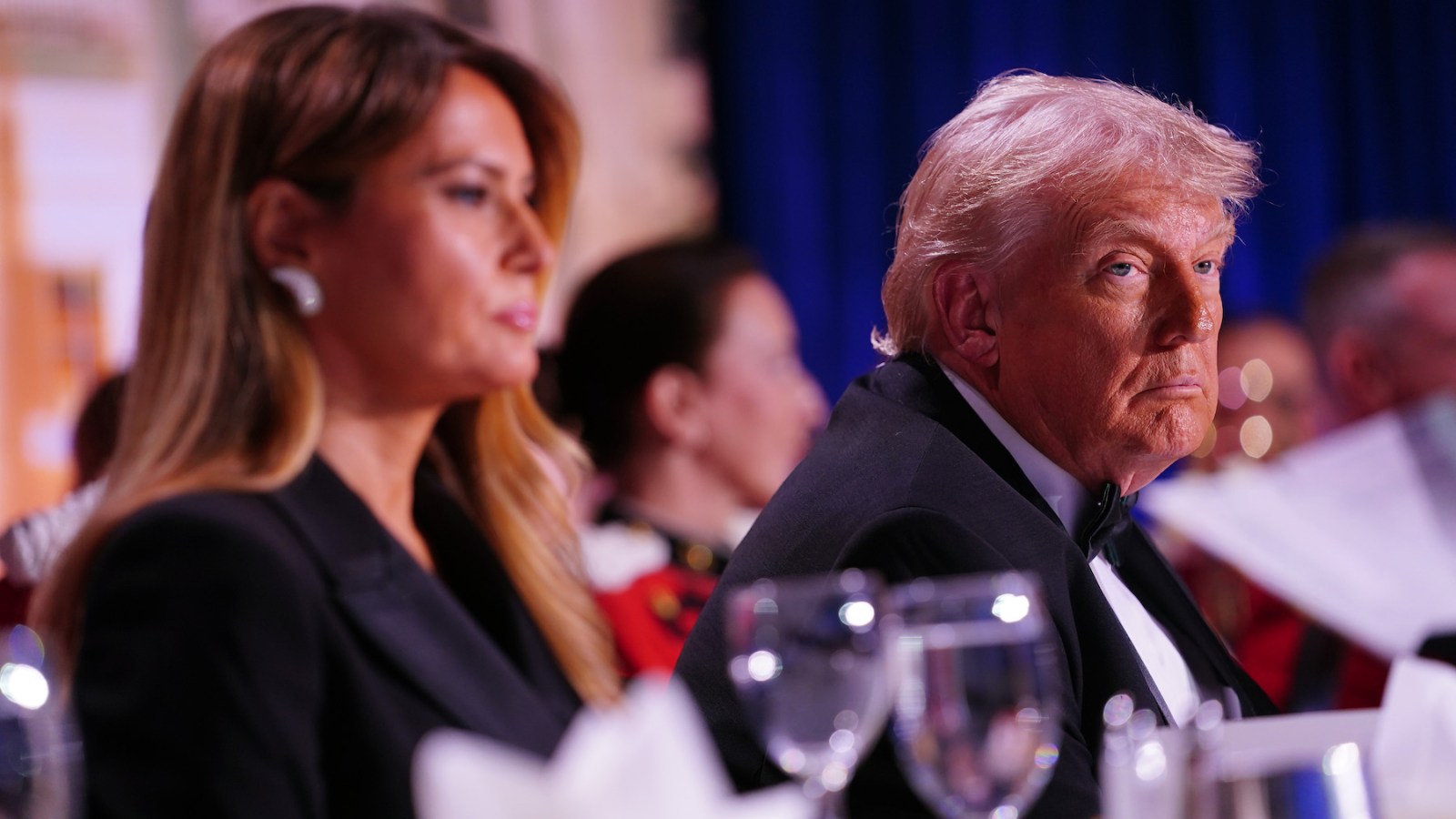
In an incident that sent shockwaves through the nation's capital and beyond, President Donald J. Trump and First Lady Melania Trump were abruptly evacuated from the highly anticipated White House Correspondents’ Dinner. The prestigious annual event, a cornerstone of Washington D.C.'s social and political calendar, devolved into chaos approximately 45 minutes after its commencement when reports of shots fired near the venue prompted immediate and decisive action from the Secret Service. This unforeseen security breach at an event traditionally known for its lighthearted humor and celebration of journalism has ignited serious concerns about presidential security protocols and the vulnerability of high-profile public gatherings.
The Unfolding Chaos at a High-Profile Event
The atmosphere inside the grand ballroom, typically filled with laughter and the murmur of conversation among dignitaries, celebrities, and top journalists, shifted dramatically from celebratory to tense in a matter of moments. Attendees initially described a sense of confusion, with many mistaking unusual sounds for part of the evening’s entertainment or an audio malfunction. However, the swift and synchronized movements of Secret Service agents, combined with hushed but urgent communications, quickly conveyed the gravity of the situation. Within seconds, security personnel converged on the presidential table, forming a protective perimeter around the President and First Lady, signaling that this was no drill but a real and present danger.
Immediate Presidential Evacuation Protocol
The Secret Service, renowned for its meticulous planning and rapid response capabilities, executed a pre-established presidential evacuation protocol with textbook precision. As the reports of gunfire were confirmed, agents moved to extract President Trump and the First Lady from the ballroom, ushering them through a secure, pre-designated exit. The swiftness of their departure underscored the agency's primary mission: ensuring the safety of the Commander-in-Chief. Details emerging later indicated that the presidential motorcade, including an armored limousine, was on standby and quickly whisked the couple to a secure location, emphasizing the multi-layered security measures in place for such public appearances, even at events perceived as relatively benign.
Investigating the Source of the Threat
In the immediate aftermath of the evacuation, law enforcement agencies launched a comprehensive investigation to ascertain the source and nature of the gunfire. Initial reports, pieced together from Secret Service communications and eyewitness accounts, suggested the shots originated from outside the immediate perimeter of the venue, though precise details remained fluid. The area surrounding the hotel was immediately locked down, with local police, FBI agents, and additional Secret Service units converging to establish a secure zone. Forensic teams began processing the scene, while K9 units swept the surrounding blocks for any potential suspects or discarded weaponry. This coordinated effort aimed to quickly identify the perpetrator and prevent any further threats, highlighting the collaborative response essential in high-stakes security incidents.
Tracing the Incident: Eyewitnesses and Law Enforcement Actions
Eyewitness accounts from individuals near the venue provided crucial, albeit sometimes conflicting, initial data. Some reported hearing a single, distinct shot, while others recalled a brief volley of multiple gunshots. Law enforcement quickly established a command center, meticulously reviewing surveillance footage from the hotel and surrounding streets, cross-referencing it with mobile phone recordings from bystanders. Interviews with taxi drivers, pedestrians, and hotel staff near the reported origin point of the gunfire became a top priority. The sheer volume of high-ranking officials and media personalities present at the dinner necessitated an incredibly thorough and rapid response, transforming a celebratory evening into a full-scale security operation with national implications.
The White House Correspondents’ Dinner: A Symbol Under Pressure
The White House Correspondents’ Dinner is more than just a social gathering; it represents a unique nexus of journalism, politics, and American culture. Founded in 1914, the annual event serves to celebrate the First Amendment, honor outstanding achievements in journalism, and traditionally features a humorous address by the sitting president. It’s a rare occasion where the President, often the subject of intense media scrutiny, engages with the press in a more informal, jocular setting. This incident, however, starkly interrupted that tradition, transforming a symbol of open dialogue into a stark reminder of persistent security threats and the heightened challenges faced in protecting national leaders. The event's disruption underscored the fragility of public spaces, even those fortified with extensive security.
Broader Implications for Press Freedom and Public Discourse
Beyond the immediate security concerns, the incident at the Correspondents’ Dinner carries significant symbolic weight for the relationship between the government and the press. An event designed to foster interaction and mutual respect between politicians and journalists became the scene of a potentially hostile act. Such an occurrence inevitably raises questions about the future accessibility of public figures to the media and the public at large. Should security measures become so stringent as to isolate leaders, it could inadvertently hinder the very democratic discourse that the dinner aims to celebrate. The incident serves as a poignant reminder that the institutions upholding a free press are not immune to external threats, necessitating a careful balance between security and openness.
Aftermath and Future Outlook for Presidential Security
In the hours and days following the evacuation, official statements from the White House and the Secret Service emphasized the ongoing nature of the investigation and reaffirmed their commitment to presidential safety. Public reaction ranged from profound concern to calls for enhanced security measures at all major public events. This incident is likely to prompt an immediate and thorough review of security protocols for presidential appearances, especially those in open or semi-open urban environments. Lessons learned from this unprecedented event will undoubtedly shape future strategies, potentially leading to more advanced surveillance, stricter perimeters, and updated rapid response tactics for protecting the nation’s highest office and its occupants.
Navigating the New Landscape of Public Safety
The incident at the White House Correspondents’ Dinner serves as a critical case study in the evolving landscape of public safety and presidential protection. As threats become more diverse and unpredictable, the agencies responsible for safeguarding leaders must continually adapt and innovate. This could mean increased reliance on intelligence gathering, pre-emptive threat assessments, and the integration of cutting-edge technology to create safer environments. While the desire for public engagement remains strong, the imperative for security will inevitably lead to a re-evaluation of how high-profile events are structured and managed. The goal is not only to prevent future incidents but also to restore public confidence in the ability to gather safely in a democratic society.
The unexpected evacuation of the President and First Lady from such a prominent event stands as a stark reminder of the constant vigilance required in an unpredictable world. As the investigation continues to unfold, NAME OF SITE remains committed to bringing you the most comprehensive and up-to-date reporting on this developing story and its broader implications for national security. Stay informed by exploring more of our in-depth analyses, exclusive interviews, and breaking news coverage right here on NAME OF SITE.
Fonte: https://www.rollingstone.com