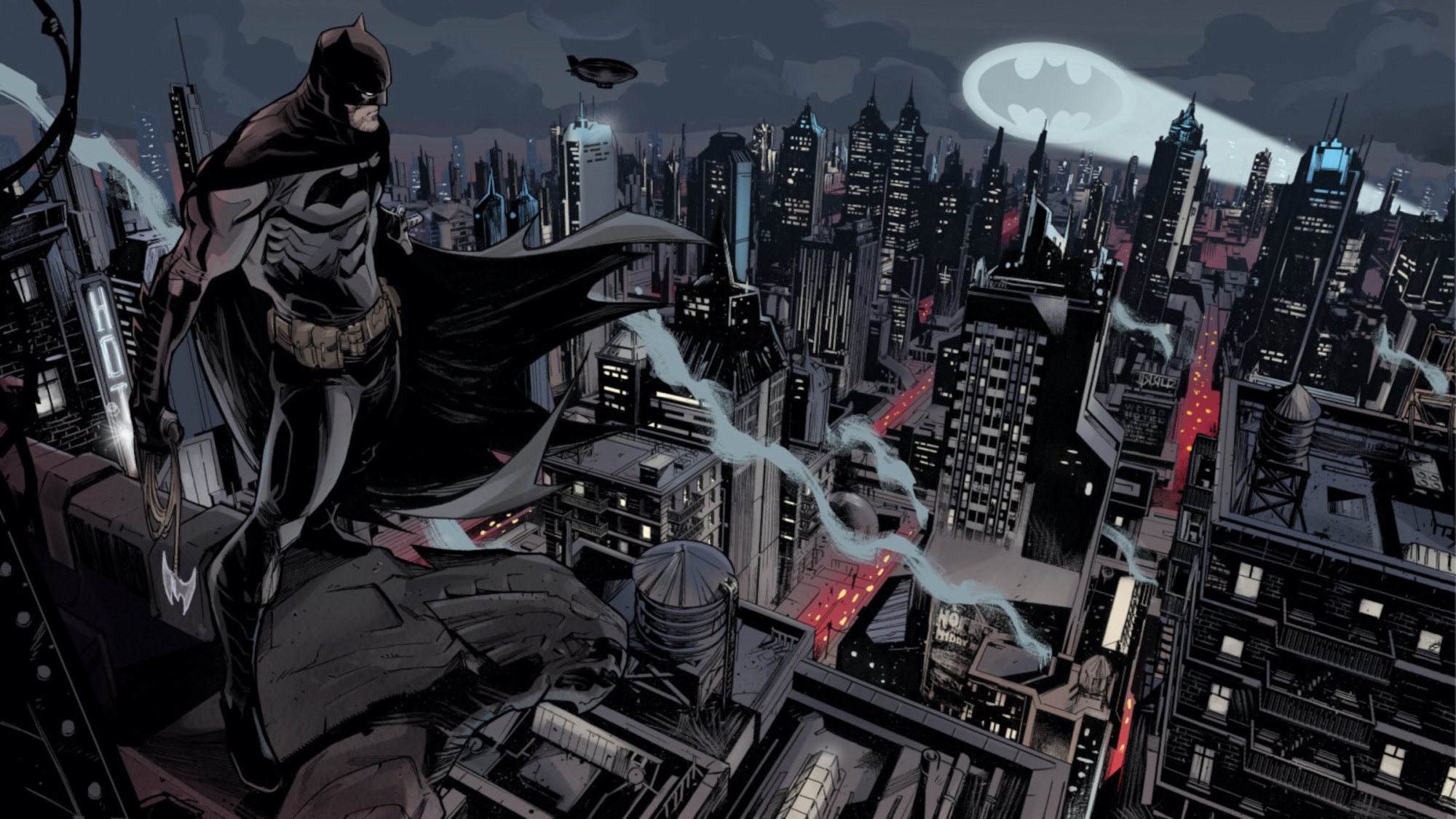
For decades, Batman has stood as a solitary bulwark against the tide of crime in Gotham City, confronting a rogues' gallery unparalleled in its depth and psychological complexity. From the enigmatic Riddler to the calculating Bane, and the tragic Two-Face, each villain presents a unique challenge, pushing the Dark Knight to his physical and mental limits. However, no adversary captures the public imagination quite like the Joker, the Clown Prince of Crime. Their rivalry is legendary, a chaotic dance between order and anarchy that has defined Gotham's struggle for its very soul across countless stories and iterations. The Joker's profound impact, including pivotal moments like the death of Jason Todd, seems to solidify his position as Batman's ultimate nemesis.
Yet, a closer, more nuanced examination reveals that Batman's true, most insidious foe is not a single costumed villain, nor even the collective might of his legendary rogues. Instead, it is Gotham City itself—a sprawling, complex entity that challenges the Caped Crusader on multiple, interconnected fronts: its deep-seated systemic corruption, the weary and often despairing nature of its populace, and a pervasive, almost supernatural darkness that seems to cling to its very foundations. This multifaceted opposition makes Gotham City an antagonist far more formidable and enduring than any individual criminal mastermind, demanding a perpetual struggle that defines Batman's mission in ways no other character can.
The Labyrinth of Systemic Corruption
Gotham City's struggle against crime is often misunderstood as merely a battle against super-powered individuals. However, the foundational truth is that the city is corrupt to its very core, a condition that predates Batman and even its most iconic villains. Its institutions, from the halls of government to the precinct houses and even various commercial enterprises, were often established with a vested interest in personal gain and the consolidation of power, rather than the welfare of its citizens. This historical precedent has created an enduring cycle where reform is met with entrenched resistance, and progress is often undermined by those who benefit from the status quo.
Bruce Wayne, through the vast resources of Wayne Enterprises and his personal fortune, tirelessly funds numerous philanthropic initiatives, aiming to uplift Gotham's communities and address the root causes of crime. He invests in schools, hospitals, social programs, and infrastructure, often contributing what amounts to ninety percent of the city's benevolent forces. Yet, these efforts frequently falter or are outright sabotaged. The systemic corruption acts like a black hole, siphoning off funds, diverting resources, and manipulating efforts for positive change. The clandestine Court of Owls, for instance, has operated from the shadows since Gotham's inception, an ancient cabal that covertly guided the city's development towards melancholy and misery, ensuring their continued control over its wealth and power. This deep-seated institutional rot means that even when good intentions push for reform, the very fabric of Gotham's governance and society often fights back, ensuring that genuine, lasting positive change remains an elusive dream for the Dark Knight.
The Burden of a Beleaguered Populace
Beyond its corrupt infrastructure, Gotham's populace itself presents a unique challenge to Batman. Living in what is consistently depicted as one of the most crime-ridden and dangerous cities in the fictional world, the residents endure constant hardship, fear, and despair. They are victims not only of supervillains and organized crime but also of the oppressive systems designed to keep them marginalized and exploited. This ceaseless torment, marked by repeated sieges, outbreaks, and destructive conflicts, fosters a deep-seated cynicism and a pervasive sense of hopelessness that inevitably impacts their trust in authority and even their heroes.
It might appear that Gothamites are quick to lose faith in Batman, readily turning against him or embracing demagogues. However, this perception overlooks the profound psychological toll of living under perpetual siege. A public constantly tormented, with no clear end in sight to their suffering, becomes naturally fickle and susceptible to fear and disillusionment. Their apparent opposition to Batman is often a manifestation of their own desperation and weariness, a struggle for survival in a city that seems determined to beat them down. This vulnerability makes them easy targets for manipulation by villains and contributes to a climate where even Batman's most heroic efforts are met with skepticism, hindering his ability to inspire lasting change and truly save the city's soul. Their collective despair, while understandable, becomes an invisible barrier to progress, making the populace an unwitting, yet significant, component of Gotham's enduring antagonism.
The Shadow of a Cursed Legacy
Perhaps the most profound and unique aspect of Gotham's adversarial nature lies in its rumored supernatural essence. Many believe the city is cursed, imbued with a dark spirit that actively resists goodness and perpetuates its cycle of despair. Evidence for this supernatural malevolence permeates various comic storylines, suggesting that Gotham isn't merely a backdrop for villainy but an active, almost sentient force contributing to it. The dark god Barbatos, for example, claims to have influenced Gotham City from its earliest days, steering its destiny toward chaos and evil specifically to foster the kind of darkness that would eventually birth Batman—a perpetual warrior whose existence inadvertently feeds the city's malevolent energy.
This metaphysical menace is woven into the very fabric of Gotham's history and geography. The storyline "Dark Knight, Dark City" explicitly presents Gotham as a seemingly sentient entity, narrating a chilling tale where the city's founders conducted the "Ceremony of the Bat"—a ritual intended to summon a demon to control Gotham, forever binding its fate to the supernatural. Other iconic elements reinforce this dark legacy, such as the mysterious Slaughter Swamp, a place where literal zombies can resurrect, or the legend of the Pale Man, an embodiment of Gotham's evil that nearly tricked Batman in Scott Snyder's acclaimed run. These aren't isolated incidents but rather recurring themes that underscore a fundamental truth: Gotham City possesses an inherent spiritual darkness that transcends mundane crime, constantly pulling it back into its shadowed depths, regardless of Batman's heroic efforts to guide it towards the light. This constant supernatural pushback tests Batman's rational mind and forces him to confront a threat that cannot be punched or outsmarted.
A Never-Ending Battle for Gotham's Soul
Ultimately, Batman's struggle is not just against costumed criminals or organized syndicates; it is a profound, unending battle against Gotham City itself. This encompasses the systemic corruption ingrained in its very foundations, the despair and cynicism of its populace, and the pervasive, almost supernatural darkness that seems to animate its every shadow. Unlike other heroes who might defeat a villain and achieve a measure of peace, Batman operates in a city that is inherently, perpetually his adversary. He cannot simply 'defeat' Gotham; his mission is a continuous, Sisyphean effort to keep its head above water, to protect its vulnerable, and to battle for its soul against forces both mundane and mystical.
This makes Batman's plight uniquely tragic and heroic. His greatest foe is a sprawling metropolis—a living, breathing entity that constantly tests his resolve, demands his endless vigilance, and reminds him of the true depth of the darkness he fights. To delve deeper into the intricate lore of Gotham City, the psychological profiles of its heroes and villains, and the compelling narratives that continue to define the comic book universe, explore the extensive articles and analyses available right here on NAME OF SITE. Join our community for more in-depth discussions and insights into the worlds that captivate us.
Fonte: https://comicbook.com